
Scan Your Site for Malicious Links and Hidden Threats
Book a Free Consultation Now
Would you like to know more about this topic?
Contact us on WhatsApp and get a free consultation from our experts
Contact on WhatsApp NowWhat is a cookie checker?
A cookie checker is a specialized tool designed to analyze how cookies are used on a website and whether they pose any privacy or security concerns. While its primary function is compliance and transparency, it also plays a role in broader security awareness, especially when combined with efforts to Scan your site for malicious links, as cookies can sometimes be exploited for tracking or malicious redirection.
From a technical perspective, a cookie checker identifies cookies set by the website and third parties, explains their purpose, lifespan, and whether they collect personal data. This helps website owners understand potential risks and ensure visitors are not unknowingly exposed to unsafe tracking behaviors.
In this context, combining cookie analysis with a Website security scan and Website security risks assessment creates a clearer picture of how user data and site integrity are protected. Cookies themselves are not malicious, but poor implementation can open doors to security misuse. At Nofal Seo, we help businesses integrate cookie compliance with advanced security auditing, ensuring privacy, trust, and protection are handled together—not in isolation.
To help readers understand this clearly:
-
Cookie checkers identify first- and third-party cookies
-
They support privacy law compliance
-
They reduce data misuse risks
-
They complement overall website security
How do you check cookies?
Checking cookies starts by scanning a website to identify what data is being stored, why it’s stored, and who has access to it. This process becomes more effective when aligned with broader security practices such as Scan your site for malicious links, because unsafe scripts and third-party integrations often rely on cookies to function.
Website owners typically use automated tools or browser-based inspections to list active cookies, their categories, and expiration periods. This allows them to verify consent, transparency, and compliance while reducing exposure to unsafe tracking behaviors.
From a security standpoint, combining cookie checks with Scan website for malware and Detect suspicious links helps identify threats that may hide behind scripts or external integrations. Cookie inspection alone is not enough unless paired with threat detection.
At Nofal Seo, we guide businesses through secure cookie auditing while ensuring that their websites remain protected against hidden vulnerabilities and unsafe external dependencies.
For a clearer understanding:
-
Use automated cookie scanners
-
Review third-party scripts carefully
-
Match cookies with user consent
-
Monitor ongoing changes regularly
How does the CookieYes cookie checker work?
CookieYes works by crawling a website and identifying cookies and tracking technologies in real time. During this process, it complements security awareness strategies such as Scan your site for malicious links, since both aim to protect users from hidden risks that are not visible on the surface.
The tool categorizes cookies, explains their purpose, and flags compliance issues related to privacy regulations. It provides clear reports that help site owners manage consent banners and disclosures accurately.
When paired with Compliance and security standards and Web application security, CookieYes becomes part of a larger ecosystem focused on trust, transparency, and protection rather than just legal compliance. At Nofal Seo, we implement CookieYes alongside security audits to ensure privacy tools don’t conflict with performance or expose technical weaknesses.
Key points readers should know:
-
CookieYes scans automatically
-
It categorizes cookies clearly
-
It supports global privacy laws
-
It improves user trust and transparency
Why should I check cookies on my website?
Checking cookies is essential because they directly impact user privacy, trust, and compliance. Beyond legal requirements, cookie misuse can expose websites to vulnerabilities, making it important to Scan your site for malicious links as part of a broader security mindset.
Cookies often interact with external scripts, analytics tools, and ads. Without proper monitoring, they can introduce risks that compromise data or user sessions. Regular cookie audits help prevent these issues before they escalate.
From a security angle, pairing cookie checks with Risk assessment tools and Security misconfigurations detection ensures that your website does not unintentionally create weak entry points for attackers. At Nofal Seo, we help brands protect both compliance and security, ensuring cookies support growth—not risk.
Why this matters to website owners:
-
Protects user privacy
-
Builds visitor trust
-
Prevents data misuse
-
Supports long-term compliance
How can I check cookies on a website?
To check cookies on a website, you can use automated scanners, browser developer tools, or third-party compliance platforms. This process aligns closely with security routines like Scan your site for malicious links, since both require identifying hidden elements that affect user safety.
Manual inspection allows developers to see active cookies, while automated tools provide structured reports and compliance insights. Both methods are most effective when used together. Adding Website security scanning tool and Network security scanning ensures cookies are not being abused by external threats or unsafe integrations.
Helpful guidance for readers:
-
Use browser developer tools
-
Run automated cookie scanners
-
Review third-party scripts
-
Monitor changes after updates
What kinds of cookies and tracking technologies does CookieYes detect?
CookieYes detects functional, analytical, performance, and advertising cookies, along with various tracking scripts. Understanding these elements is critical when you Scan your site for malicious links, as tracking technologies can sometimes be abused for harmful purposes.
The platform also identifies pixels, tags, and embedded third-party services that may collect user data. This transparency allows site owners to control what runs on their website. When aligned with Threat detection and mitigation and Web server security, this visibility helps prevent data leaks and unauthorized tracking.
Key takeaways:
-
Detects first- and third-party cookies
-
Identifies tracking scripts
-
Supports privacy classification
-
Improves transparency
What are different types of cookies categorized by CookieYes cookie scanner?
CookieYes categorizes cookies based on their purpose, including necessary, functional, analytics, and marketing cookies. This classification supports compliance while reinforcing security awareness, especially when you Scan your site for malicious links.
Each category helps website owners decide what should load by default and what requires user consent. This structured approach reduces unnecessary exposure to risky third-party tools. Combining this with CVE vulnerability scanning and Patch management ensures technical safety beyond compliance.
For better understanding:
-
Necessary cookies ensure core functionality
-
Analytics cookies track performance
-
Marketing cookies support advertising
-
Functional cookies enhance usability
How to check if my website is cookie compliant?
Cookie compliance involves ensuring transparency, consent, and proper data handling. While legal in nature, it intersects with security practices like Scan your site for malicious links, since unsafe scripts can violate both privacy and security.
Using compliance tools, reviewing consent mechanisms, and maintaining clear disclosures help meet regulatory requirements. Regular audits ensure continued compliance as websites evolve. Integrating Compliance and security standards with Website security scan offers a unified protection strategy.
What website owners should do:
-
Display clear consent banners
-
Document cookie usage
-
Update policies regularly
-
Audit after site changes
Pages to analyze if a link is secure
Analyzing pages for link security helps prevent users from accessing harmful content. This practice complements efforts to Scan your site for malicious links, ensuring visitors are not redirected to unsafe destinations.
Security-focused platforms evaluate reputation, malware presence, and blacklist status. These checks reduce exposure to phishing and malware risks. Using Malicious URL detection and Detect malicious links on website strengthens user protection.
Why this is important:
-
Prevents phishing attacks
-
Protects user data
-
Maintains site reputation
-
Enhances trust
How can I check cookies on a website?
Checking cookies involves identifying active scripts and data storage methods. When combined with Scan your site for malicious links, it creates a more secure browsing environment.
Advanced tools automate this process, providing categorized insights and compliance recommendations. Pairing this with Endpoint security and Web application security ensures protection across devices and platforms.
Best practices include:
-
Automated scanning
-
Manual verification
-
Consent validation
-
Continuous monitoring
Google Malware Checker
Google Malware Checker helps identify unsafe websites and links. It supports proactive security by enabling site owners to Scan your site for malicious links and avoid search penalties.
The tool provides a simple verdict on whether a site is safe, helping users avoid known threats. Using it alongside Real-time threat detection and Website security scanning tool enhances overall protection.
Why it’s useful:
-
Backed by Google data
-
Easy to use
-
Identifies known threats
-
Protects reputation
Top Tools to Scan Websites for Malicious Links
URLVoid
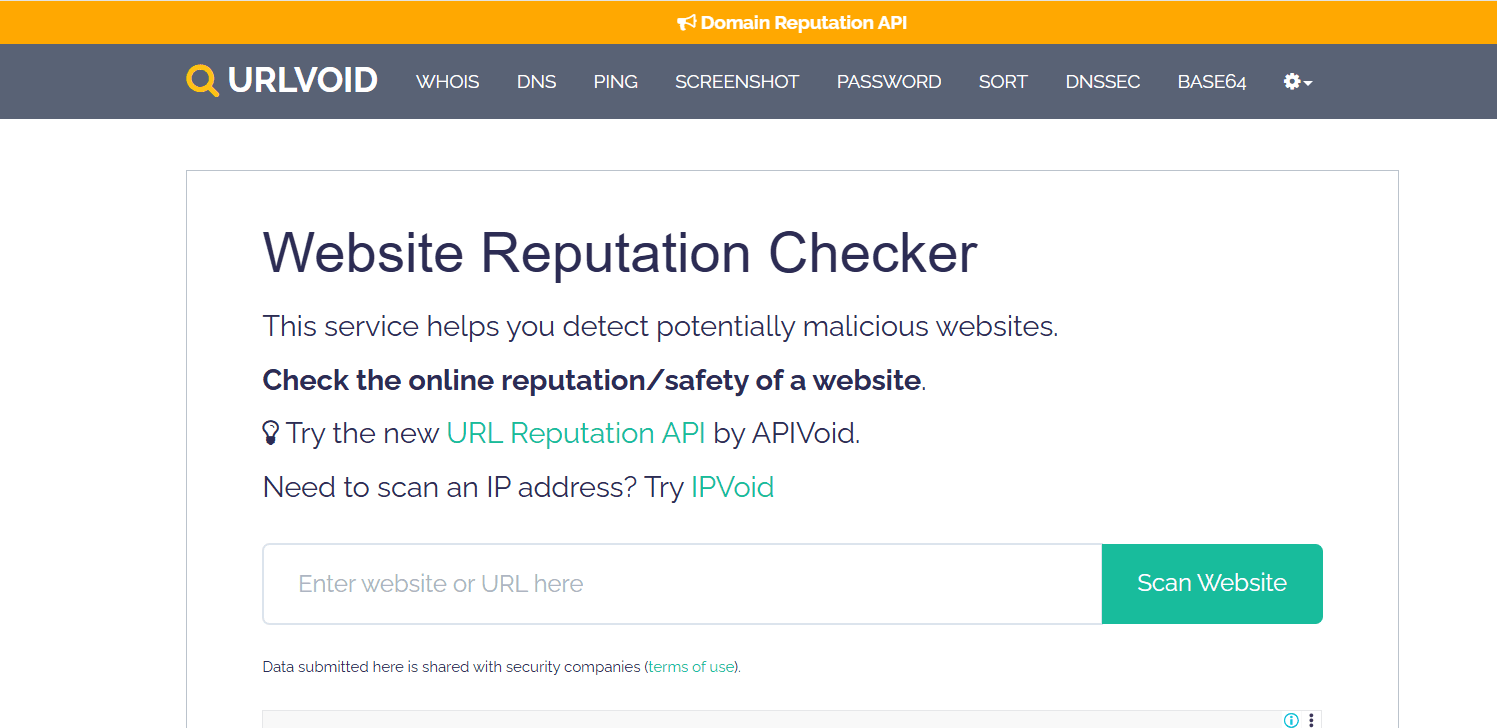
URLVoid is a very popular and interesting option. It is very easy to use. Once we are on your website, we will find a bar to place any link we are interested in analyzing. Then we give a Scan Website and you can check if it is online and you will also see its reputation with external databases, if we put a website here and tell us it is malicious, it sure is, although you will always have to evaluate whether you really want to enter that site or no.The downloaded websites are usually flagged as malicious even though they are not really, this is due to the huge amount of ads on them due to the presence of a lot of malware, however, the copyright related entities are also responsible for placing these websites on Blacklists so people don’t access it to download audiovisual content.
We will automatically see a series of information indicating whether the site is reliable or not. We can see if it was added to the blacklist, where the server is located, when it was registered (it would be interesting to see if it was something new and could be created for an attack), etc.
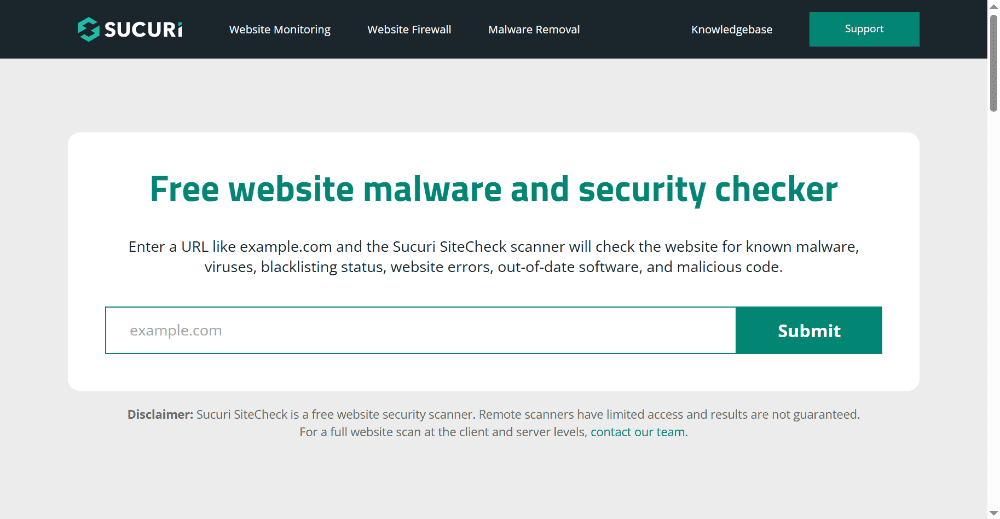
Sucuri
Sucuri is an alternative that offers more information. It is very useful to scan your site for malicious links for any type of link or domain you want to analyze and see if you can trust it or not. As in the previous case, when we enter the page we will find a bar to put the address of interest to us and give it the analysis. On this occasion, it will analyze whether the web contains any kind of malware or threatens our security, it will also analyze various blacklists where the web might be, such as “Google Safe Browsing, McAfee, ESET, Yandex, Opera” databases and others. All these databases are widely used and recognized by many DNS filters such as those of Cloudflare, AdGuard, Pi-Hole and more.
In this case we will see more complete data. It tells us if it detected any kind of malware in this link, if there is spam, if it is up to date, errors on the server, etc. It uses several engines for web security analysis, and it is one of the most reliable we can find today.
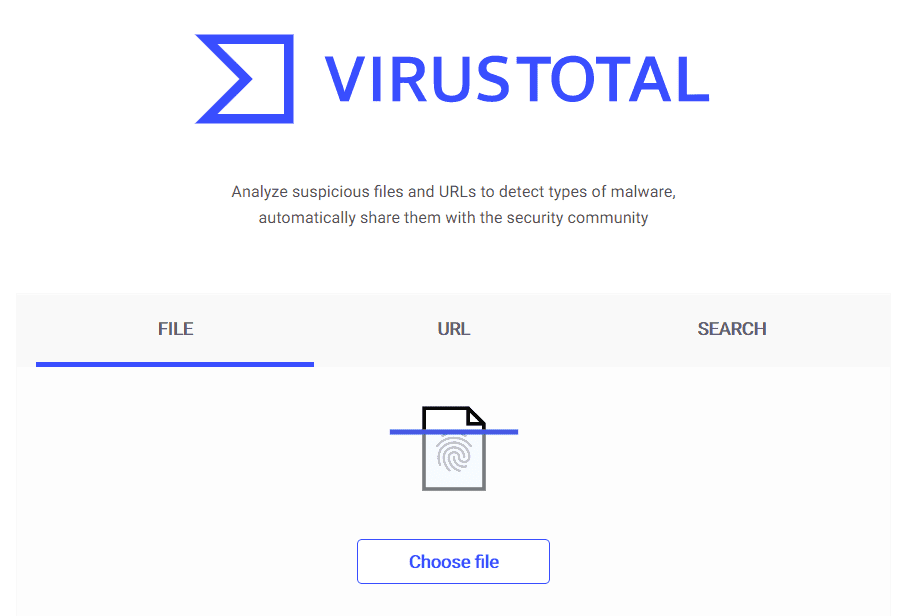
VirusTotal
VirusTotal is also a very ideal option. It has a browser and software extension that we can use on our computers. But it also has a web page where you can simply Scan your site for malicious links and analyze files and links without having to install anything extra. When we enter, we will find various options, among which is the analysis of the “URL” address. VirusTotal is one of the most widely used services in the world for analyzing malware in files and also in the URLs we refer to, perfect for keeping us protected. It should be remembered that VirusTotal is a subsidiary of Google. We have to write the link that interests us and give it for analysis. Later we will be shown a series of data telling us whether the page is secure or not.
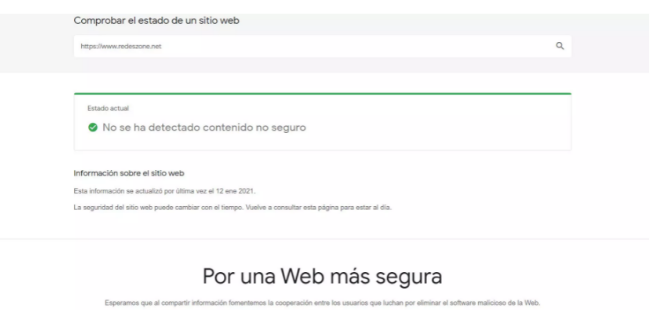
Google Malware Checker
You can’t miss a Google gadget. The search giant also has its own link analyzer. It is a Google Malware Checker, where we can enter any link and check if there is some kind of security issue behind it. There we will find a bar to put the address that interests us. It is simpler than the previous options. In this case, it only tells us if the link we set is secure. It does not give us more information.
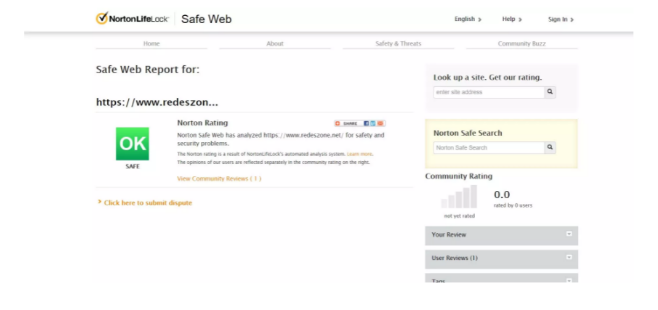
Norton Safe Web Check
Norton is a very popular antivirus, used by many users. It also has other tools on site to check whether the address is secure or not. Its operation is very simple and intuitive. We just have to enter the link that interests us and give it for analysis.
Then it will show us a table with the result of that location. If it is reliable, it will appear green and give us an Ok. This way, you can Scan your site for malicious links and you will know if the domain or link we are analyzing is trustworthy or not.
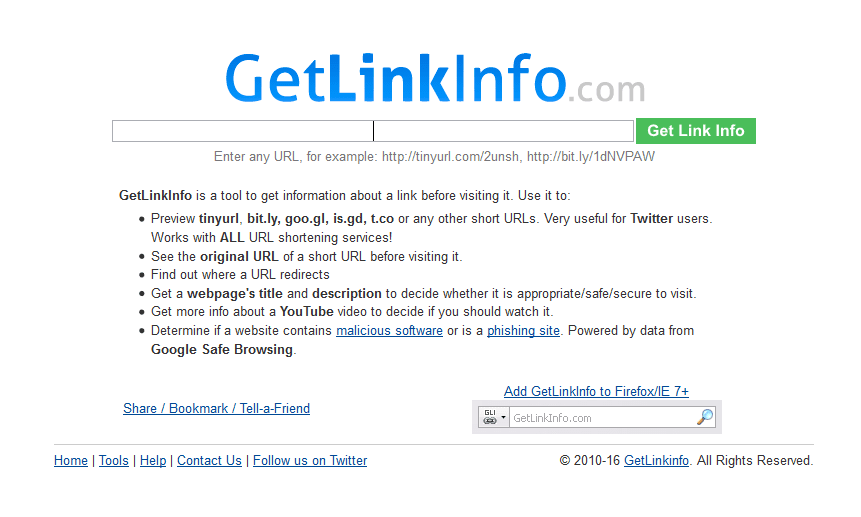
GetLinkInfo
In this case GetLinkInfo is not like the previous pages It will enable you to Scan your site for malicious links and see if the web page is safe or not. The task is to allow the user to put a short link and show the real address, without having to open it in the browser. This way we avoid accessing a page that could pose a threat. Shortened links can be used by hackers to infiltrate malicious links. The victim does not really see the real URL, he opens it and can come to a modified site to carry out an attack on your site, simply thanks to this page we can find out the real address before opening it. By using these links, we can navigate the network more securely. We can analyze whether the link is reliable or, on the contrary, we must be careful and not trust it. We already know that there are many online threats that can collect information and jeopardize our privacy.
What to do to prevent malicious link attacks
Use Reliable Security Software
The first and most essential step is installing a trusted antivirus or security solution. Built-in tools such as Windows Defender, as well as third-party solutions like Avast or Bitdefender, can provide strong real-time protection. These tools can detect and block malicious files before they are downloaded, preventing damage without the need for manual link analysis.
If malware activity is suspected, it is critical to immediately disconnect the device from the internet. This prevents malicious software from communicating with external servers, downloading additional components, or leaking sensitive data.
Keep Your Systems Up to Date
Regular system updates play a crucial role in security. Cyber attackers often exploit known vulnerabilities in operating systems or software applications. By keeping all systems fully updated and applying security patches as soon as they are released, you can close potential entry points and significantly reduce exposure to threats—even if a malicious link is accessed accidentally.
Practice Careful and Logical Browsing
Malware often consumes excessive system resources. Monitoring system performance through tools like Task Manager can help identify unusual activity. If a process is using an abnormally high amount of resources, it should be investigated immediately, followed by a full security scan.
Equally important is adopting a cautious mindset while browsing. Avoid clicking on suspicious or unfamiliar links, especially those received via email or messaging platforms. Many malicious websites are specifically designed to steal information or distribute malware through deceptive links.
By combining strong security software, regular system updates, and careful browsing habits, users can greatly improve their protection against malicious link attacks and maintain a safer online environment.
Do you need a consultation about this topic?
Contact on WhatsApp
