
Budget and schedule in Project Management

Book a Free Consultation Now
Would you like to know more about this topic?
Contact us on WhatsApp and get a free consultation from our experts
Contact on WhatsApp NowBudget and schedule refer to the financial plan and timeline that define how a project is executed, controlling how much money is spent and when tasks are completed. Together, they provide a structured framework that helps organizations manage resources, avoid delays, and prevent cost overruns by aligning expenses with planned activities and deadlines. When properly integrated, budget and schedule ensure projects remain realistic, measurable, and achievable. At Nofal SEO, we apply structured budget and schedule planning to deliver projects efficiently while maximizing value and maintaining full cost and time control.
What Is a Budget Schedule?
A budget schedule is a structured plan that outlines how financial resources are allocated and spent over a defined period of time within a project. Budget and schedule work together in this context to ensure that costs are distributed in alignment with project phases, timelines, and milestones, helping decision-makers track spending against progress and avoid financial overruns.
A budget schedule is closely connected to cost planning, time-based budgeting, and project financial control. It allows teams to forecast expenses, monitor cash flow, and adjust spending based on actual performance. At Nofal SEO, we rely on clear budget schedules when managing marketing projects to ensure resources are invested at the right time and deliver measurable value.
A budget schedule typically includes:
- Planned costs assigned to specific time periods
- Alignment between project phases and financial allocation
- Forecasting of future expenses and cash flow needs
- Monitoring planned versus actual spending
- Early identification of budget risks and overruns
- Financial visibility throughout the project lifecycle
What Is a Schedule?
A schedule is a detailed timeline that defines when project tasks start, how long they take, and when they are expected to be completed. Budget and schedule are closely connected in project planning, as the schedule determines the duration of activities, milestones, and deadlines that directly influence resource usage and overall project costs.
A project schedule is associated with task sequencing, timeline management, and milestone tracking. It helps teams coordinate work, allocate resources efficiently, and monitor progress against planned deadlines. At Nofal SEO, we use structured schedules to ensure marketing activities are delivered on time while maintaining consistency between execution, budget control, and performance goals.
A project schedule typically includes:
- Defined tasks and activities
- Start and finish dates for each task
- Dependencies between activities
- Project milestones and deadlines
- Resource allocation over time
- Progress tracking and timeline updates

What Is the Difference Between a Budget and a Schedule?
A budget represents the financial plan of a project, while a schedule defines the timeline and sequence of tasks required to complete the work. Budget and schedule differ in purpose but are highly interdependent, as changes in time directly affect costs and resource allocation.
While the budget focuses on how much money is required and where it will be spent, the schedule focuses on when tasks will start and finish. Successful project planning depends on integrating both elements so that financial planning supports realistic timelines rather than operating in isolation.
The key differences between a budget and a schedule include:
- Budget focuses on costs, while schedule focuses on time
- Budget tracks financial resources, schedule tracks tasks and milestones
- Budget controls spending limits, schedule controls deadlines
- Budget is measured in currency, schedule is measured in time
- Budget changes impact scope, schedule changes impact cost
- Both must stay aligned to ensure project success
What Are the 4 Types of Budgets?
Budgets are categorized into different types based on how resources are planned, controlled, and monitored within a project or organization. Budget and schedule planning depends heavily on selecting the right budget type, as each one serves a specific purpose and supports decision-making at different stages of the project lifecycle.
Each budget type helps organizations manage costs, forecast expenses, and control financial performance more effectively. Understanding these types allows project managers to choose the most suitable approach for tracking spending and aligning financial plans with timelines and objectives.
The four main types of budgets include:
- Fixed Budget, which remains unchanged regardless of project progress
- Flexible Budget, which adjusts based on activity levels or workload
- Operating Budget, focused on day-to-day operational expenses
- Capital Budget, used for long-term investments and major assets
How to Make a Budget Schedule?
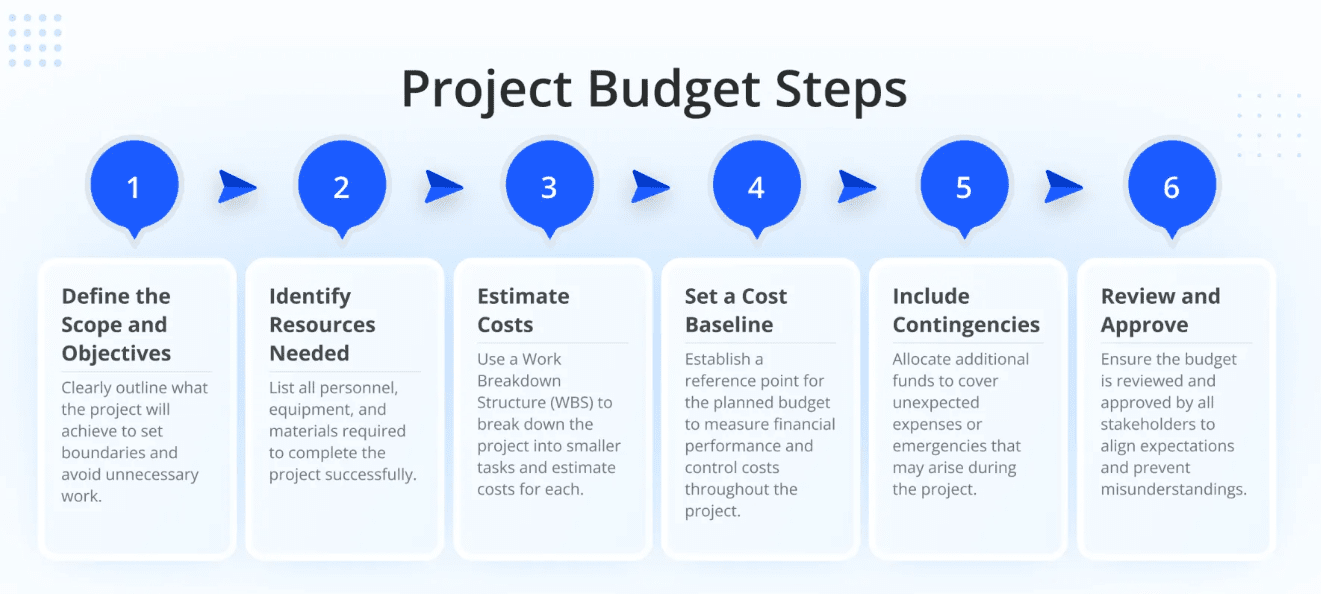
Creating a budget schedule involves organizing project costs over a defined timeline to ensure financial resources are available when needed. Budget and schedule integration is essential at this stage, as costs must be aligned with project phases, task durations, and key milestones to avoid delays or overspending.
The process relies on cost estimation, timeline planning, and resource allocation to build a realistic and actionable financial plan. At Nofal SEO, we apply structured budget scheduling methods in project planning to maintain clarity, control spending, and ensure smooth execution across all stages.
The basic steps to create a budget schedule include:
- Defining project scope and deliverables
- Estimating costs for each task or phase
- Assigning costs to specific time periods
- Aligning expenses with the project timeline
- Monitoring actual spending versus planned costs
- Updating the schedule based on performance and changes
The Relationship Between the Schedule and Budget
The relationship between the schedule and the budget is one of the most critical aspects of effective project management. Budget and schedule are tightly interconnected, as the project timeline directly determines how long resources are used, while the budget defines how much can be spent during that time. Any delay in the schedule usually leads to increased costs, and any budget limitation can force changes to the project timeline.
When schedules are extended, labor costs, operational expenses, and resource usage typically rise. On the other hand, aggressive timelines may require additional resources, overtime, or higher costs to meet deadlines. For this reason, project success depends on keeping both elements aligned and continuously updated as the project progresses.
This relationship is driven by time–cost trade-offs, resource utilization, and cost forecasting. Effective planning requires schedule control, budget monitoring, and performance tracking to ensure neither time nor money is wasted. At Nofal SEO, aligning timelines with budgets helps ensure marketing projects remain profitable while meeting delivery expectations.
Key aspects of the relationship between schedule and budget include:
- Schedule delays leading to increased project costs
- Budget constraints affecting task duration and sequencing
- Resource allocation impacting both time and cost
- Continuous monitoring to keep plans aligned
- Trade-offs between faster delivery and higher expenses
- The need for regular adjustments during execution
The Relationship Between Defining and Planning the Work
Defining the work is the foundation upon which all planning activities are built. Budget and schedule accuracy depends heavily on how clearly the project work is defined, as vague or incomplete definitions often lead to unrealistic timelines and incorrect cost estimates. When work is properly defined, planning becomes more structured, predictable, and measurable.
Planning the work translates defined tasks into actionable steps, timelines, and resource requirements. If the scope is not clearly defined, planning efforts may overlook critical tasks, underestimate costs, or create schedules that are impossible to achieve. This makes proper work definition essential for effective budgeting and scheduling.
This relationship relies on scope definition, work breakdown structures, and planning accuracy. Clear definitions support realistic scheduling, accurate cost estimation, and efficient resource planning. At Nofal SEO, defining project tasks in detail before planning ensures better control over timelines, budgets, and overall execution quality.
The connection between defining and planning the work includes:
- Clear scope definition leading to accurate plans
- Well-defined tasks supporting realistic schedules
- Better cost estimation through detailed work breakdowns
- Reduced risk of scope creep and rework
- Improved coordination between teams and resources
- Stronger control over budget and timeline performance

Why Budget and Schedule Are Critical for Project Success
Budget and schedule are critical for project success because they define the financial and time boundaries within which all work must be completed. Budget and schedule provide a clear framework for decision-making, helping teams understand what can be delivered, when it should be delivered, and at what cost. Without proper control over these two elements, projects are more likely to face delays, cost overruns, and scope creep.
When both budget and timeline are planned realistically, projects become more predictable and easier to manage. They allow stakeholders to set expectations, allocate resources efficiently, and measure progress objectively. A well-aligned budget and schedule also make it easier to identify risks early and take corrective action before small issues turn into major problems.
Project success is strongly influenced by financial discipline, time management, and performance control. Effective use of resource planning, progress tracking, and risk management ensures that projects stay on track and within limits. At Nofal SEO, structured budget and schedule planning helps ensure projects deliver value while maintaining efficiency and accountability.
Key reasons budget and schedule are critical include:
- Setting realistic expectations for stakeholders
- Preventing cost overruns and missed deadlines
- Supporting efficient resource allocation
- Enabling performance measurement and control
- Reducing risks and unexpected changes
- Improving overall project reliability and outcomes
Tools Used for Budget and Schedule Management
Managing budgets and schedules effectively requires the use of specialized tools that support planning, tracking, and reporting. Budget and schedule management tools help project teams visualize timelines, monitor costs, and adjust plans in response to changes, ensuring better coordination and control throughout the project lifecycle.
These tools range from simple spreadsheets to advanced project management software. The right tool depends on project size, complexity, and reporting needs. When used correctly, they provide real-time insights into progress, spending, and resource usage, allowing teams to make informed decisions quickly.
Common tools are associated with project planning software, cost tracking systems, and collaboration platforms. Features such as timeline visualization, budget forecasting, and performance reporting make it easier to manage complex projects. At Nofal SEO, we rely on organized tools to align execution with budgets and timelines while maintaining clarity and transparency.
Common tools used for budget and schedule management include:
- Project management software (e.g., task and timeline tracking tools)
- Budgeting and cost-tracking spreadsheets
- Gantt charts for schedule visualization
- Resource management and allocation tools
- Performance dashboards and reporting systems
- Collaboration tools for team coordination
Examples of Budget and Schedule in Real Projects
Real project examples clearly show how planning time and money together leads to better outcomes. Budget and schedule are applied across different industries to control costs, manage timelines, and ensure projects are delivered as expected. Whether in construction, marketing, IT, or operations, aligning financial planning with timelines helps teams avoid delays and unexpected expenses.
For example, in a marketing campaign, the budget may be distributed across monthly activities such as ads, content creation, and optimization, while the schedule defines launch dates, testing phases, and reporting timelines. In construction projects, budgets are often tied to project phases, and schedules define milestones like foundation completion or final delivery.
These examples highlight practical project planning, realistic cost allocation, and time-based execution strategies. Understanding how budgets and schedules work together in real situations helps teams apply best practices, improve forecasting accuracy, and make informed adjustments when conditions change.
Common real-world examples include:
- Marketing campaigns with monthly budgets and weekly timelines
- Construction projects with phase-based budgets and milestone schedules
- Software development projects using sprint budgets and delivery timelines
- Event planning with fixed budgets and date-driven schedules
- Operational projects with recurring costs and rolling schedules
- Consulting projects billed by time periods and deliverables
Conclusion: Budget and Schedule in Effective Planning
In effective project planning, aligning time and financial resources is essential for achieving predictable and successful outcomes.
- Ensuring budget and timeline alignment improves project control
- Clear planning reduces risks of delays and cost overruns
- Integrated scheduling supports smarter resource allocation
- Continuous monitoring keeps projects on track
- Realistic planning improves stakeholder confidence
- Strong coordination leads to higher project success rates
In conclusion, effective Budget and schedule planning is the foundation of successful project execution, helping organizations control costs, manage time, and achieve predictable results. When budgets and schedules are aligned, projects become more efficient, transparent, and easier to manage. If you want to improve your project planning and gain better control over time and costs, contact Nofal SEO today and let our experts help you build structured, results-driven budget and schedule strategies.
Do you need a consultation about this topic?
Contact on WhatsApp
