
Improve TrustRank with WHOIS for Better SEO and Search Visibility
Book a Free Consultation Now
Would you like to know more about this topic?
Contact us on WhatsApp and get a free consultation from our experts
Contact on WhatsApp Now
To Improve TrustRank with WHOIS, search engines must be able to clearly verify who owns and operates a website. This process starts by ensuring that domain ownership data is accurate, transparent, and aligned with on-site trust elements such as About, Contact, and Privacy Policy pages. When WHOIS information matches real business details, it signals legitimacy, accountability, and long-term intent, which strengthens Google’s trust evaluation. At Nofal Seo, we specialize in implementing these trust-building foundations alongside advanced SEO strategies, helping brands establish credibility, protect their rankings, and achieve sustainable organic growth in competitive markets.
What is Google TrustRank?
Google TrustRank is a conceptual framework used to describe how search engines evaluate the credibility, reliability, and legitimacy of a website over time. The core idea behind TrustRank is to separate trustworthy websites from spammy or low-quality ones by analyzing multiple trust signals, including transparency, authority, and historical consistency. One of the foundational elements used to Improve TrustRank with WHOIS is providing clear ownership data, which helps search engines confirm that a real, accountable entity stands behind the domain rather than an anonymous or disposable source.
From a broader SEO perspective, website credibility signals play a crucial role in modern rankings, especially for competitive and sensitive niches. At Nofal Seo, we help brands build long-term trust by aligning technical, content, and authority signals into one cohesive SEO strategy that search engines and users both recognize as reliable.
-
TrustRank focuses on credibility, not just keywords or links
-
It helps Google distinguish real businesses from spam networks
-
Transparency and accountability are central trust indicators
What Are TrustRank Principles?
TrustRank principles are built around the idea that trustworthy websites behave differently from untrustworthy ones. These principles include clear ownership, consistent publishing behavior, authoritative backlinks, and user-focused content. Search engines evaluate whether a site demonstrates long-term legitimacy rather than short-term manipulation. Applying these principles correctly can Improve TrustRank with WHOIS by reinforcing signals such as verified ownership, business continuity, and alignment between content purpose and site identity.
In advanced SEO, trust-based ranking factors are no longer optional—they are essential. This is why Nofal Seo integrates TrustRank principles directly into every optimization process, ensuring that our clients don’t just rank temporarily but build sustainable authority that survives algorithm updates.
-
TrustRank principles are behavioral, not cosmetic
-
Consistency matters more than short-term SEO tactics
-
Trust is accumulated gradually through multiple signals
Trust Pages 101
Your site contains about, contact, and privacy policy pages. It is obvious and necessary that without these pages, search engines will not consider your site as trustworthy, they will not be able to improve TrustRank using WHOIS, and actual readers will not know that:
Your About page
Who are you? Who runs the site, and why do you have the authority to share your industry expertise? All of these questions are clearly answered through the About page on your website. This page gives you the opportunity to present yourself to the community as a real, credible entity that does not hide behind a slogan or a vague brand message. By clearly showcasing your team members, their roles, and how users can follow them on social media, you build transparency and credibility. More importantly, a well-structured About page helps Improve TrustRank with WHOIS by aligning visible business identity with domain ownership signals, while also strengthening Google’s trust in your website.
contact page
The contact page is one of the most important pages on your site. What is the use of knowing who you are and what you do. Without knowing where I can call you? Are you actively available to help people? These pages are especially important for local businesses and local SEO. Local business websites should include that page in particular which is the one customers can visit to purchase products or services in a physical location rather than just online, their address and structured data which can be easily done using a WordPress SEO plugin like Yoast if your website Powered by WordPress CMS. This is the first way to improve TrustRank using WHOIS.
Privacy Policy and Terms pages
Last but not least, policies, disclaimers, and affiliate disclosures play a critical role in establishing website credibility. Although many consider these pages “boring,” Google clearly values them, as it requires all Google AdSense publishers to include such policies before joining its ad network. The reason is simple: most spammers and PBN operators avoid creating these pages, which makes them a strong differentiator between real websites operated by legitimate businesses and sites that cannot be trusted. By implementing clear Privacy Policy and Terms & Conditions pages—using solutions like Termageddon or Iubenda that automatically update with legal changes—websites can Improve TrustRank with WHOIS by reinforcing transparency and legitimacy. While these pages alone do not guarantee trust, they represent an essential step and one of many signals Google uses to better understand and evaluate your website.
What is WHOIS?
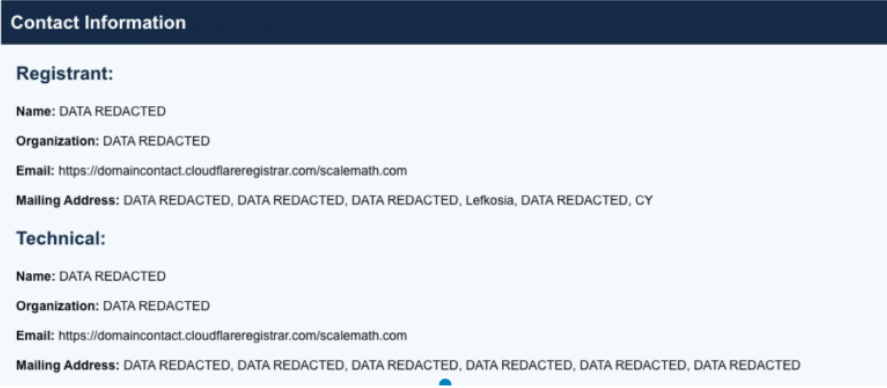
WHOIS, pronounced “who is,” is a query protocol used to verify information about domain name ownership. If you’re already a registered business, make this information public. No serious business has private WHOIS information but before doing so make sure the address is real and not your home address, the address where your company is incorporated should be official and real.
It’s understandable that some people choose to hide their ownership of the domain so that no one will try to access them or find out who is behind the website but since Google is starting to recognize which sites it considers untrustworthy, it can be worth avoiding. separately ,This seems like a minor change that has no impact on your site in general, but when you take into account the wide range of changes – having a real address, and canonical pages (about, contact, privacy policy). Although none of these signals affect your site independently, it is a right step in a group of steps in the right direction in order to gain Google’s trust.
Improve TrustRank with WHOIS
WHOIS data acts as a transparency layer that helps search engines validate the legitimacy of a website. When ownership information is public, accurate, and consistent with on-site trust pages, it sends a strong signal that the website is operated by a real entity. This transparency can directly Improve TrustRank with WHOIS, especially when combined with official business addresses, branded email domains, and matching legal information across the site.
In terms of domain ownership trust, professional SEO agencies understand how to balance privacy with credibility. At Nofal Seo, we guide businesses on structuring WHOIS data correctly without exposing personal risk, while still maximizing trust signals that search engines favor.
-
Public WHOIS data increases transparency
-
Ownership consistency reinforces site legitimacy
-
WHOIS works best when aligned with trust pages
What website can you trust?
There are signs that make you reassured when you deal with a site without others, and perhaps the most famous of these signs is that the website is professional and clearly describes who runs the site, the commercial activity of the site, if any, in addition to information about how to contact them and their whereabouts. All these signs indicate to you that it is a site that respects its users and is trustworthy. Below we will explain our most important steps in improving TrustRank using WHOIS.
domain age – does it matter?
It is reasonable that search engines do not immediately rank a new website that lacks content and backlinks. In contrast, a domain that has existed for more than five years often benefits from stronger content depth and more authoritative links, which gives it a clear advantage. This reality does not mean that new websites cannot succeed; however, when content quality and inbound links are equal, an older domain usually ranks more easily. Since Google aims to deliver the most relevant and reliable results, it naturally views established domains as more trustworthy, which helps Improve TrustRank with WHOIS by reinforcing historical credibility and long-term site consistency.
domain renewal length (incorrect)
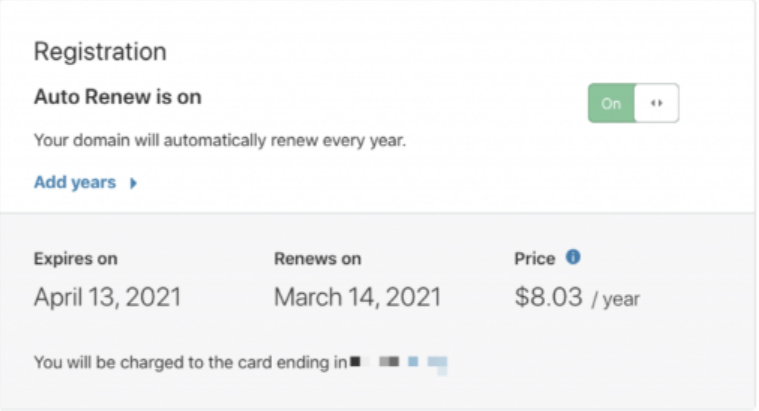
There are very few SEO professionals working in the SEO field. They say that the length of your domain registration has a negative impact on trust. Google came in response to these rumors. Saying that users should not care how many years the domain has been registered. It is very normal for the domain to be renewed annually. The argument behind the first claim was that trust pages are important and that untrusted sites register for a shorter period of time to reduce costs. But this method makes a mistake by itself, because most of the sites that you visit daily renew the domain annually.
Link to trusted external sources
On the other hand, linking to a trusted domain has proven to be a great signal of trust. Look at any ranked website and you’ll notice that they link to each other to support their stats. Strategically and most importantly, linking naturally to other resources on the web is an essential part of writing great engaging content. (and arrangable).
It is also an important step in building website credibility and authority. A clear example of this impact comes from a study conducted by Reboot Online, which demonstrated a strong correlation between higher user engagement and improved search rankings. The experiment was repeated in April 2020, and the results confirmed the same conclusion. When websites link to authoritative external sources, they reinforce content quality and help Improve TrustRank with WHOIS by signaling transparency, relevance, and industry awareness. External links remain a valid ranking factor and a best SEO practice even today, so it is best to view each link as a meaningful contribution to the web community.
Linking to other sources proves that you know what’s going on in your industry and aren’t afraid to share other resources that other sites already link to because they are useful and worth including in your content rather than isolating yourself from the rest of the industry. However, it is important to remember that the sites you choose to link to directly reflect on the quality of your site. You link to websites in a way that Google considers unusual, or websites that are of low quality. This may negatively affect your site’s ranking. You also will not want to link to any competing content. If you’re writing a guide on SEO on your site, linking to another SEO guide on your competitor’s site won’t work.
Internal Linking
Inbound links obviously play a huge role in improving TrustRank using WHOIS, and are in fact one of the most important ranking factors. If you run a site that already has a lot of content, you can and should also use internal linking to your advantage.
Why Understanding TrustRank Principles Is Important
Understanding TrustRank principles allows website owners to move beyond outdated SEO tactics and focus on building real digital authority. TrustRank affects how quickly a site earns rankings, how resilient it is to algorithm updates, and how much visibility it can maintain long-term. Brands that fail to understand these principles often struggle to scale, even with strong content. Proper alignment helps Improve TrustRank with WHOIS by ensuring that off-site data supports on-site credibility signals.
From a strategic standpoint, long-term SEO sustainability depends on trust. This is where Nofal Seo differentiates itself by educating clients and implementing frameworks that protect rankings, build authority, and turn SEO into a stable growth channel rather than a risky experiment.
-
TrustRank impacts ranking stability
-
It protects sites from algorithm volatility
-
Understanding it prevents wasted SEO efforts
How to Apply TrustRank Principles in Your SEO Strategy
Applying TrustRank principles in SEO requires a holistic approach that combines technical accuracy, authoritative content, and transparent branding. This includes building clear About and Contact pages, earning natural backlinks, and maintaining consistency across all digital footprints. These efforts work together to Improve TrustRank with WHOIS by reinforcing the site’s legitimacy from both internal and external perspectives.
When it comes to strategic SEO execution, Nofal Seo specializes in translating abstract trust principles into actionable steps that drive measurable results. We don’t just optimize pages—we engineer trust into the entire SEO ecosystem.
-
TrustRank must be integrated, not isolated
-
SEO strategy should reflect real business identity
-
Authority grows through consistency and relevance
The TrustRank Algorithm and Modern Search Evolution
While TrustRank is not a single published algorithm, its principles are deeply embedded in modern search evolution. Google now prioritizes signals related to experience, authority, and trust as part of its quality evaluation systems. Websites that demonstrate authenticity and accountability are rewarded over those using manipulative tactics. These systems collectively Improve TrustRank with WHOIS by cross-referencing ownership data with content quality and link behavior.
In the era of AI-driven search quality, agencies like Nofal Seo focus on future-proof SEO strategies that align with Google’s long-term direction, not just short-term ranking hacks.
-
TrustRank concepts evolved with Google’s quality systems
-
AI amplifies the importance of trust signals
-
Manipulation tactics are increasingly ineffective
How to Check and Measure Your Google Trust Score
There is no official TrustRank score published by Google, but trust can be measured indirectly through multiple indicators. These include backlink quality, brand mentions, organic growth stability, and technical integrity. Monitoring these metrics helps diagnose trust gaps and opportunities to Improve TrustRank with WHOIS by ensuring ownership and branding data support performance signals.
Using SEO trust metrics analysis, Nofal Seo provides advanced audits that uncover hidden trust issues and prioritize fixes that produce real ranking improvements instead of surface-level changes.
-
Trust is measured indirectly, not numerically
-
Backlink quality outweighs backlink quantity
-
Stable growth is a strong trust indicator
Key Strategies to Boost Your TrustRank
Boosting your TrustRank requires a set of deliberate, long-term strategies that focus on credibility rather than shortcuts. One of the most effective approaches is to maintain full transparency across your website, including clear ownership details, accurate business information, and verified domain data. These actions help Improve TrustRank with WHOIS by aligning domain ownership with visible trust signals, which reduces ambiguity and increases search engine confidence.
Another critical strategy involves building authority through quality rather than volume. Publishing expert-driven content, earning backlinks from reputable sources, and maintaining consistent branding across all platforms reinforce trust over time. At Nofal Seo, we implement these trust-focused strategies to help businesses grow safely, rank consistently, and protect their visibility from algorithm fluctuations.
Key strategies explained:
-
Publish expert, high-quality content consistently
-
Earn authoritative backlinks from trusted domains
-
Maintain transparent ownership and business details
-
Align WHOIS data with About and Contact pages
-
Use consistent branding across all digital platforms
Optimize Your On-Page Trust Signals
On-page trust signals include author bios, clear brand messaging, structured data, and transparent policies. These elements help users and search engines understand who you are and why your content deserves attention. When aligned correctly, they Improve TrustRank with WHOIS by reinforcing the connection between the website content and its verified ownership.
From an on-page SEO trust optimization perspective, Nofal Seo ensures that every page communicates credibility, professionalism, and expertise in a way that both users and algorithms recognize instantly.
-
On-page trust influences user behavior
-
Author transparency enhances credibility
-
Structured data supports trust validation
Optimize Technical SEO Factors
Technical SEO plays a silent but powerful role in TrustRank. Secure connections (HTTPS), crawlable architecture, fast loading times, and clean code all signal professionalism and reliability. These technical foundations support efforts to Improve TrustRank with WHOIS by ensuring that trust signals are not undermined by poor infrastructure.
Through technical SEO trust optimization, Nofal Seo fixes hidden weaknesses that often prevent strong brands from reaching their full ranking potential.
-
Technical health reinforces trust
-
Security is a non-negotiable trust factor
-
Poor performance weakens credibility
Common TrustRank Mistakes to Avoid
Many websites fail to build TrustRank because they focus on shortcuts rather than substance. Common mistakes include hiding ownership, buying low-quality links, neglecting trust pages, or using inconsistent branding. These issues can actively harm efforts to Improve TrustRank with WHOIS by creating contradictions that search engines interpret as risk signals.
Avoiding SEO trust violations is a core part of how Nofal Seo protects client websites, ensuring that growth is built on solid foundations rather than fragile tactics.
-
Lack of transparency damages trust
-
Spam links erode authority
-
Inconsistency confuses search engines
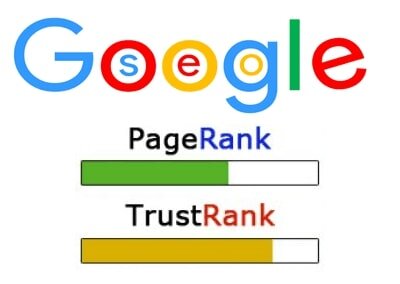
What’s the Difference Between PageRank and TrustRank?
The difference between PageRank and TrustRank lies in what each system measures and why Google uses them. PageRank focuses on link popularity, while TrustRank focuses on credibility and trustworthiness. Although both concepts rely on links, they serve very different purposes in Google’s ranking ecosystem.
PageRank: Authority Through Links
PageRank is Google’s original algorithm designed to measure the importance of a webpage based on backlinks. The core idea is simple:
the more high-quality pages that link to you, the more authority your page gains.
However, PageRank does not evaluate intent or trust. A site can accumulate links through manipulation, paid backlinks, or link schemes and still appear authoritative under PageRank alone.
Key characteristics of PageRank:
-
Measures link quantity and link authority
-
Focuses on popularity, not legitimacy
-
Can be manipulated through spammy link tactics
-
Does not evaluate who owns the website
TrustRank: Credibility and Legitimacy
TrustRank was introduced to solve PageRank’s biggest weakness: spam. Instead of asking “How many sites link to you?”, TrustRank asks “Can this site be trusted?”
TrustRank evaluates signals such as transparency, ownership, content intent, link quality, and historical behavior. That is why practices like verified ownership, trust pages, and clean link profiles help Improve TrustRank with WHOIS and reduce the risk of being classified as low quality or spam.
Key characteristics of TrustRank:
-
Measures trust, credibility, and authenticity
-
Evaluates link quality, not just quantity
-
Detects spam and manipulative behavior
-
Relies on transparency and consistency signals
The Core Difference in Simple Terms
-
PageRank answers: How popular is this page?
-
TrustRank answers: Should Google trust this page?
A website can have strong PageRank but weak TrustRank if it relies on artificial links or hides ownership. In contrast, a site with strong TrustRank may rank more consistently over time, even with fewer backlinks.
Why This Difference Matters for SEO
Modern SEO success depends on balancing both. PageRank can help a page rank faster, but TrustRank determines whether those rankings last. Google increasingly prioritizes trust-based signals to protect users from misinformation, scams, and low-quality content.
That’s why sustainable SEO strategies focus not only on earning links, but also on building transparency, authority, and long-term credibility.
In conclusion, building real online authority requires more than technical optimization or content creation alone. By focusing on transparency, consistent trust signals, and verified domain ownership, businesses can Improve TrustRank with WHOIS and strengthen their credibility in the eyes of both search engines and users. If you want to turn trust into measurable rankings and long-term organic growth, let Nofal Seo guide your strategy with proven, trust-driven SEO solutions. Contact us today and start building a website that Google truly trusts.
Do you need a consultation about this topic?
Contact on WhatsApp
