
Book a Free Consultation Now
Would you like to know more about this topic?
Contact us on WhatsApp and get a free consultation from our experts
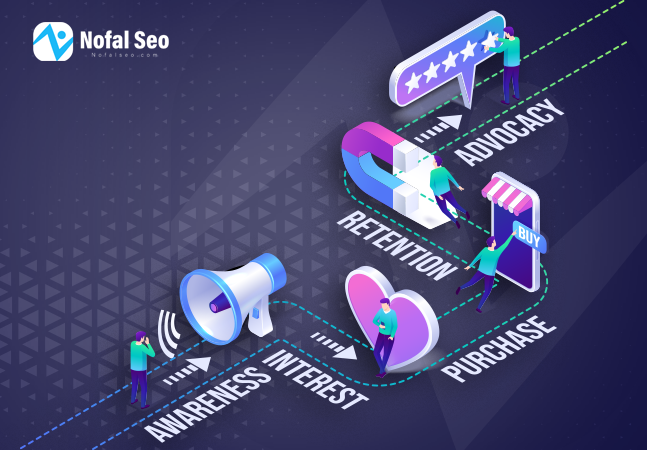
Contact on WhatsApp NowThe Buyer’s Journey is the structured process a potential customer follows from recognizing a problem to making a purchasing decision, reflecting how buyers think, search, evaluate options, and build confidence before choosing a solution. Understanding this journey allows businesses to deliver the right message at the right time, reduce friction in the decision-making process, and improve conversion rates. At Nofal Seo, we transform the buyer’s journey into a performance-driven SEO and content strategy by aligning search intent, content creation, and conversion optimization—helping brands attract high-quality traffic and turn it into real, measurable growth.
What is the buyer’s journey?
The Buyer’s Journey is the structured path a potential customer follows from recognizing a problem to making a purchasing decision. It reflects how buyers think, research, and evaluate options before committing to a product or service, making it a critical framework for aligning sales and marketing efforts with real buyer behavior.
Understanding this process allows businesses to anticipate buyer needs at every stage, deliver relevant information, and remove friction points that could delay or prevent conversion.
To better understand the buyer decision-making process, it’s important to focus on customer buying behavior, which explains how and why buyers move from awareness to purchase:
-
Buyers identify a specific problem or need
-
They actively research solutions available in the market
-
They compare alternatives based on value, trust, and relevance
-
They make a final decision when confidence is established
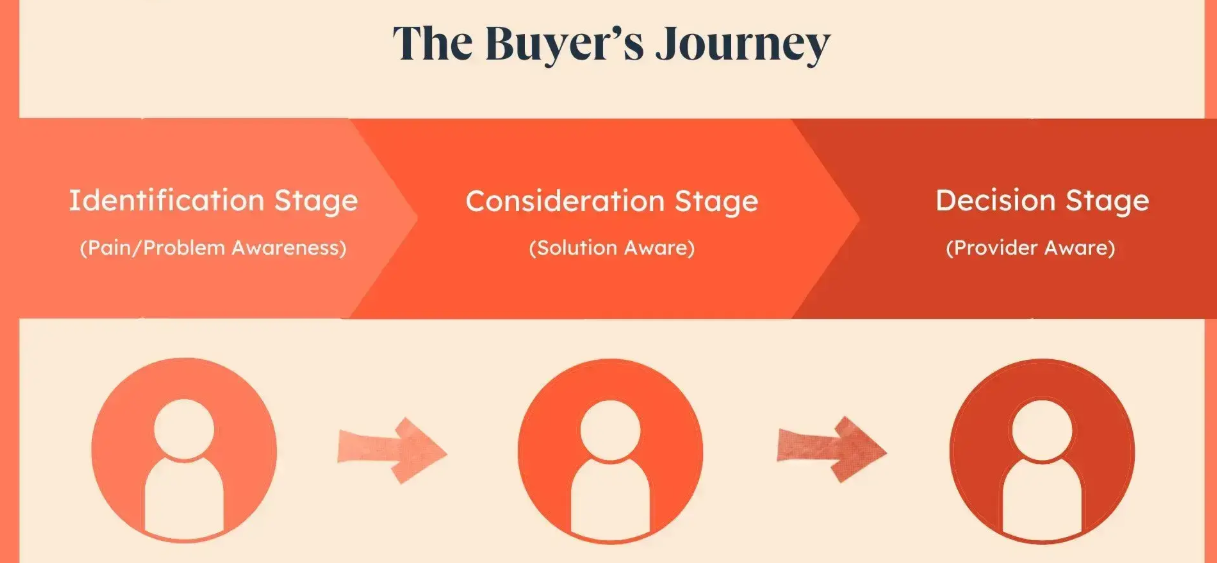
Buyer journey stages
The Buyer’s Journey is commonly divided into structured stages that represent how buyer intent evolves over time. Each stage reflects a shift in mindset, from learning about a problem to confidently selecting a solution.
By recognizing these stages, businesses can match the right message to the buyer’s level of readiness and avoid pushing sales conversations too early. This is where buyer journey stages play a critical role in building scalable content strategies, something Nofal Seo specializes in by mapping each stage to search intent and high-converting SEO content.
To support this progression effectively, marketers rely on buyer journey stages to guide content and communication strategies:
-
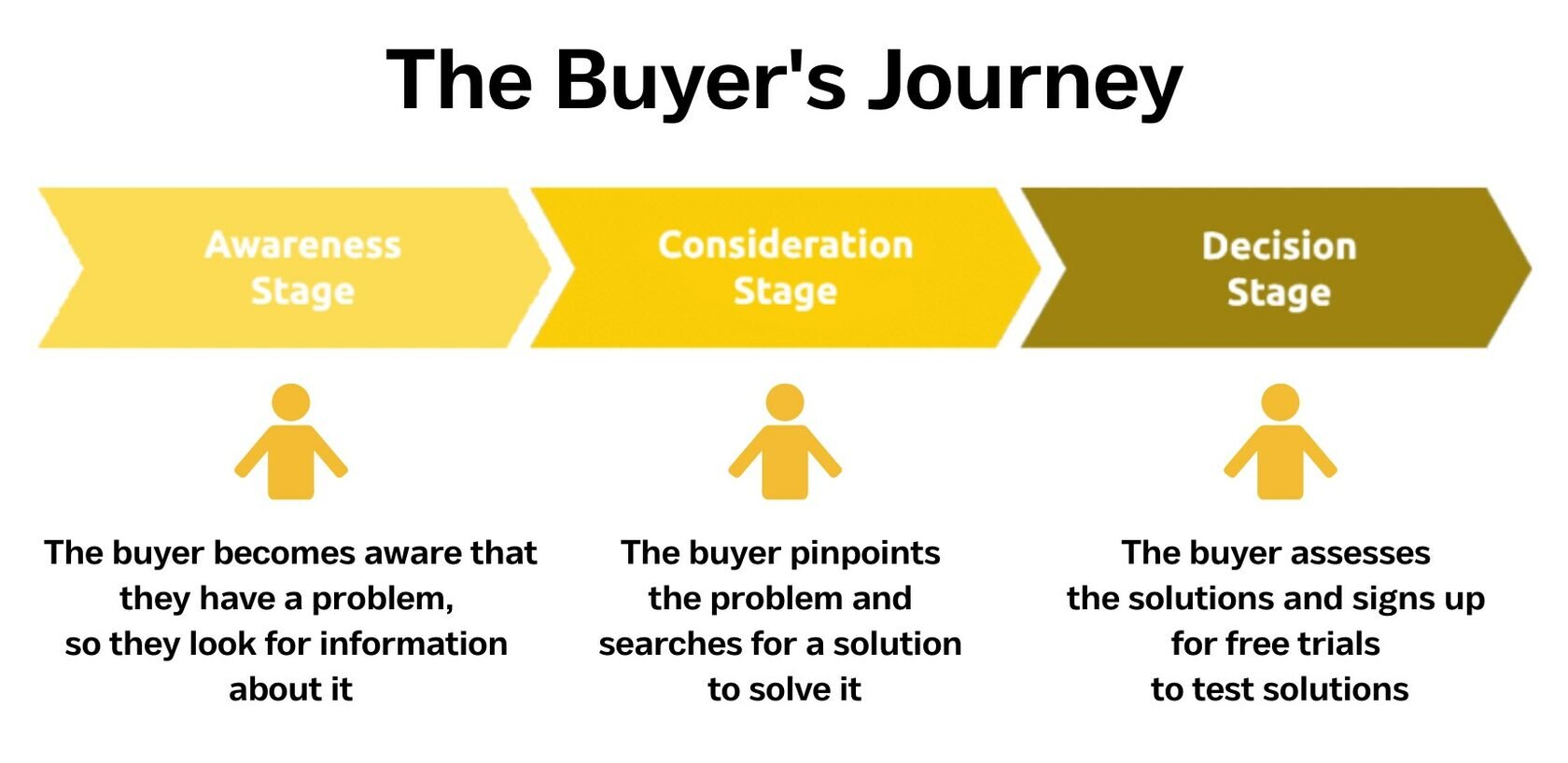
Awareness stage: the buyer recognizes a challenge or opportunity
-
Consideration stage: the buyer evaluates possible solutions
-
Decision stage: the buyer selects a provider or product
-
Each stage requires different content formats and messaging
-
Misaligned messaging can cause buyers to disengage
Why is the buyer’s journey important?
The Buyer’s Journey is important because it helps businesses understand how buyers make decisions instead of relying on assumptions. When companies align their strategies with buyer intent, they increase trust, relevance, and conversion rates across the entire sales cycle.
From a growth perspective, an effective customer acquisition strategy depends heavily on journey-based content planning. At Nofal Seo, we build acquisition frameworks that align SEO, content, and conversion paths with real buyer intent—ensuring visibility, relevance, and higher-quality leads.
From a strategic perspective, customer acquisition strategy becomes more effective when built around the buyer’s journey because it allows teams to:
-
Address buyer objections at the right time
-
Personalize messaging based on intent
-
Reduce friction in the decision-making process
-
Improve lead quality and conversion efficiency
Buyer’s journey vs. customer’s journey
The Buyer’s Journey focuses on the steps taken before a purchase is made, while the customer journey begins immediately after the transaction. Understanding this distinction helps businesses manage both acquisition and retention more effectively. Each journey serves a different purpose, but together they form a complete view of the customer lifecycle and long-term value creation.
To clarify this difference, businesses often analyze customer lifecycle stages, which highlight how engagement changes over time:
-
Buyer’s journey ends at conversion
-
Customer journey focuses on onboarding and retention
-
Post-purchase experience drives loyalty and advocacy
-
Both journeys require different success metrics
Difference Between the B2B Buyer’s Journey and the B2C Buyer’s Journey
The Buyer’s Journey differs significantly between B2B and B2C environments due to variations in decision-making complexity, motivation, and timeline. B2B purchases typically involve multiple stakeholders and longer evaluation periods, while B2C decisions are often faster and emotionally driven.
Recognizing these differences allows businesses to adjust messaging, content depth, and sales approaches accordingly. When comparing these paths, B2B vs B2C marketing strategy becomes essential for proper alignment:
-
B2B focuses on ROI, efficiency, and long-term value
-
B2C emphasizes emotion, convenience, and brand appeal
-
B2B sales cycles are longer and more consultative
-
B2C purchases often happen quickly with minimal interaction
B2B buyer’s journey example
In a B2B context, the Buyer’s Journey often starts when a company identifies an operational problem that impacts performance or revenue. Decision-makers then research solutions, compare vendors, and evaluate long-term business impact before committing.
This process is deliberate and data-driven, requiring trust, education, and proof of value at every stage. A strong B2B sales funnel example typically includes the following progression:
-
Problem identification by internal teams
-
Research through thought leadership and case studies
-
Vendor comparison and stakeholder alignment
-
Demos, proposals, and final approval
B2C buyer’s journey example
For consumers, the Buyer’s Journey is usually shorter and influenced by emotion, social proof, and immediate needs. Buyers may move quickly from discovery to purchase based on reviews, recommendations, or brand perception.
Speed and clarity are critical, as consumers have many alternatives and low tolerance for friction. A typical consumer buying journey includes these key moments:
-
Awareness through ads, social media, or referrals
-
Quick evaluation using reviews and comparisons
-
Purchase decision driven by trust and convenience
-
Post-purchase experience influencing repeat behavior
4 tips for applying the buyer’s journey to the sales cycle
Applying the Buyer’s Journey to the sales cycle ensures that sales efforts align with buyer readiness rather than internal targets. This alignment improves engagement quality and reduces resistance during sales conversations.
Effective sales cycle optimization requires aligning SEO, content, and sales touchpoints with buyer intent. This is a core approach at Nofal Seo, where journey-based optimization is used to reduce drop-offs and improve close rates through intent-driven content. To improve performance, teams often refine their sales cycle optimization using these principles:
-
Match sales actions to buyer intent
-
Avoid pushing demos too early
-
Use data to identify readiness signals
-
Support decisions with relevant proof points
Making the Buyer’s Journey Work for You
Making the Buyer’s Journey work requires continuous refinement based on real buyer behavior, feedback, and performance data. Businesses that master this approach shift from selling aggressively to guiding confidently.
A strong buyer-centric marketing strategy focuses on long-term trust and sustainable growth. At Nofal Seo, we implement buyer-centric frameworks that connect SEO visibility with conversion-focused journeys—turning traffic into qualified buyers. To sustain success, focus on buyer-centric marketing strategy by prioritizing:
-
Deep understanding of buyer motivations
-
Consistent messaging across touchpoints
-
Collaboration between sales and marketing
-
Ongoing optimization based on insights
In conclusion, understanding the Buyer’s Journey allows businesses to connect with potential customers at the right moment with the right message, creating smoother decision-making and higher conversion rates. When your SEO, content, and sales efforts are aligned with buyer intent, growth becomes more predictable and scalable. If you’re ready to turn insight into action, Nofal Seo can help you build a buyer-journey-driven strategy that attracts the right audience and converts them into real customers—get in touch today and start driving measurable results.
Do you need a consultation about this topic?
Contact on WhatsApp
