
How Egypt Tours & Egypt Luxury Tours Keywords Can Dominate Google with Smart SEO Marketing
Book a Free Consultation Now
Would you like to know more about this topic?
Contact us on WhatsApp and get a free consultation from our experts
Contact on WhatsApp NowHow Egypt Tours & Egypt Luxury Tours Keywords Can Dominate Google with Smart SEO Marketing
A professional search strategy for Egyptian tourism companies that want more visibility, stronger authority, and consistent bookings from international travelers.
The Egyptian travel market is one of the most attractive and competitive tourism spaces in the world. Every month, travelers search for the Pyramids, Cairo tours, Luxor temples, Nile cruises, Red Sea holidays, private guides, family itineraries, and luxury cultural experiences. For tourism companies in Egypt, this creates a powerful opportunity: appear on Google at the exact moment a traveler is researching, comparing, and preparing to book.
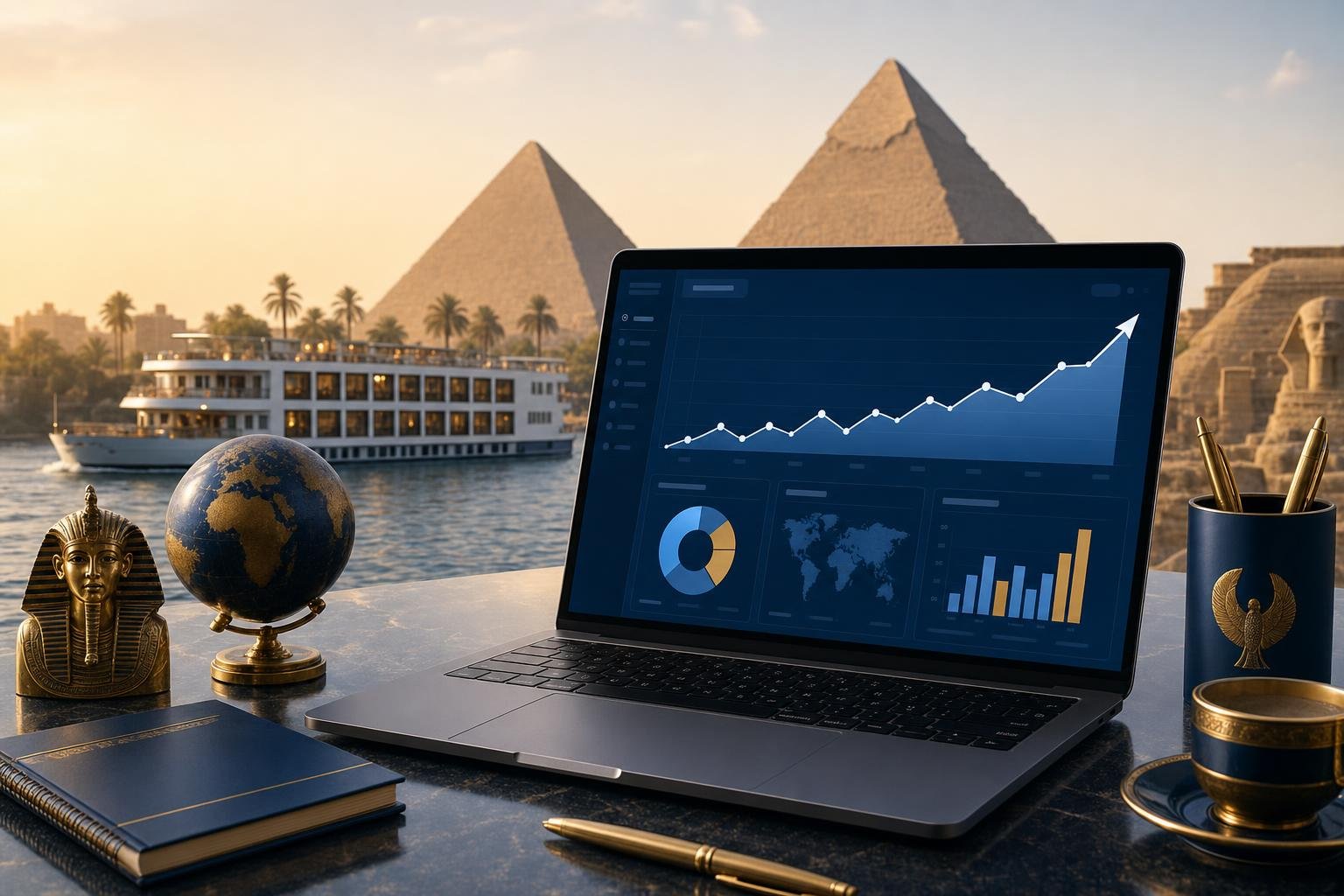
That is why smart SEO marketing is no longer optional for tour operators. A beautiful website is important, but beauty alone will not bring traffic. Paid ads can generate fast leads, but costs rise quickly and disappear as soon as the campaign stops. Organic SEO, on the other hand, builds a long-term acquisition channel. When a travel brand ranks for high-intent keywords like Egypt tours and egypt luxury tours, it receives visitors who are already interested in Egypt and are much closer to making a booking decision.
This article explains how a complete SEO plan can help an Egyptian tourism website compete in Google, why backlinks are part of the strategy, and how strong content, technical optimization, mobile design, and authority signals work together to support rankings.
Why SEO Matters for Tourism Companies in Egypt
Travel decisions usually begin with search. A visitor may start with a broad question such as “best time to visit Egypt,” then move to commercial searches such as “private Egypt tours,” “Egypt family packages,” “luxury Egypt itinerary,” or “Nile cruise from Luxor to Aswan.” Each search is a chance for a tourism company to introduce its brand, answer questions, build trust, and guide the visitor toward booking.
For Egyptian tour companies, SEO creates several important advantages. It increases organic visibility without depending only on advertising. It supports direct bookings instead of relying completely on third-party travel platforms. It helps international travelers discover the company from the United States, Europe, Asia, and the Middle East. Most importantly, it builds trust because users often view top-ranking websites as more credible and established.
The real value of ranking is intent
Ranking for a general keyword can bring awareness, but ranking for a booking-intent keyword can bring revenue. A user searching for Egypt tours is not just reading history. They are often comparing providers, itineraries, prices, comfort level, and service quality. A user searching for egypt luxury tours usually has an even clearer expectation: premium service, private arrangements, expert guides, comfortable transportation, and a smooth travel experience.
Choosing the Right Keywords for a Tourism SEO Campaign
A successful SEO campaign starts with understanding keyword intent. Tourism keywords can be informational, commercial, or transactional. Informational keywords help attract people at the research stage, while commercial and transactional keywords are closer to bookings. A balanced strategy uses both types, but high-value service pages should be built around commercial terms.
The keyword Egypt tours is broad, competitive, and valuable. It can represent many travel styles, including private tours, group tours, cultural tours, historical trips, family packages, honeymoon itineraries, and multi-day vacations. Because it is a main keyword, the homepage or primary landing page should be optimized with strong content, clear headings, internal links, testimonials, destination highlights, and conversion-focused calls to action.
The keyword egypt luxury tours targets a premium segment. These travelers are often looking for five-star hotels, private Egyptologist guides, comfortable vehicles, curated schedules, flexible service, and exclusive experiences. From an SEO perspective, this keyword should be supported by content that communicates quality, trust, personalization, and expertise.
The strategy should also support related pages. For example, many travelers searching for luxury Egypt experiences are interested in a Nile cruise, because cruising between Luxor and Aswan is one of the most iconic ways to explore ancient temples and the beauty of the river. Visitors may also want to browse available trips to compare destinations, duration, travel style, and package details.
Building the Website Foundation Before Backlinks
Backlinks are powerful, but they should not be treated as a shortcut. Before a campaign focuses on external authority, the website itself must be ready to convert and rank. Google needs to understand the structure of the site, users need to enjoy the experience, and every important page must serve a clear purpose.
A tourism website should also include real photos, reviews, secure contact options, visible WhatsApp or inquiry buttons, and clear company information. International travelers need reassurance before booking with a company in another country. Trust signals are not decoration; they directly influence conversion rates.
Why Backlinks Are Essential for Google Authority
Backlinks remain one of the most important authority signals in SEO. When another relevant website links to a tourism company, that link acts like a recommendation. Google uses backlinks to evaluate credibility, topical relevance, and authority. However, the quality of backlinks matters much more than the quantity.
A strong backlink from a relevant marketing, tourism, travel, business, or local authority website can support rankings better than many weak links from unrelated sources. The goal is not to create spam. The goal is to build a natural backlink profile that tells Google the website deserves to be considered when people search for Egypt travel services.
For this campaign, the backlink plan is designed to support the most important commercial pages. The anchor text Egypt tours strengthens the main website for broad travel searches. The anchor text egypt luxury tours supports premium positioning. The Nile cruise link promotes one of Egypt’s strongest travel experiences, while the trips link helps users discover available packages and detailed travel options.
Creating Content That Supports Rankings and Bookings
Content is the engine of SEO. For a tourism brand, content should answer questions, reduce uncertainty, inspire travelers, and move them toward an inquiry. A website that only lists services may struggle to rank against competitors that publish detailed guides, destination resources, and helpful planning content.
A smart Egypt tourism content strategy can include articles about the best Egypt tours for first-time visitors, how to choose a luxury Egypt itinerary, the best time to visit Egypt, private versus group tours, Cairo and Giza travel planning, Luxor and Aswan itinerary ideas, family-friendly Egypt packages, and what to expect from a professional Egyptologist guide.
Each article should target a clear keyword and include internal links to relevant commercial pages. An article about premium travel in Egypt can link to egypt luxury tours. A guide about river travel can link to a Nile cruise page. A planning article about vacation options can link to available trips. This structure helps users and search engines understand the relationship between educational content and booking pages.
Anchor Text Strategy Without Over-Optimization
Anchor text is the clickable text used in a link. It helps users and search engines understand the topic of the destination page. Exact-match anchor text can be useful, but it must be used carefully. If every backlink uses the same exact phrase, the profile may look unnatural. A healthy strategy includes exact-match anchors, partial-match anchors, branded anchors, naked URLs, and natural phrases.
In this campaign, the target anchors are relevant because they accurately describe the destination pages: Egypt tours, egypt luxury tours, Nile cruise, and trips. These links fit naturally inside an article about SEO for Egyptian tourism companies because they point to real travel services and useful pages.
Improving Design, Colors, and Mobile Readability
SEO performance is not only about rankings. User experience matters because visitors must feel comfortable enough to stay, read, click, and contact the company. If a page has inconsistent colors, poor spacing, small text, or weak mobile formatting, users may leave before taking action.
For a tourism and marketing article, a professional design should use a controlled color palette. Navy blue communicates trust, gold suggests premium value, white keeps the page clean, and soft sand tones connect naturally with Egypt travel. The layout should be simple on mobile, with readable headings, short paragraphs, clear cards, and buttons or links that are easy to tap.
- Use one primary color and one accent color.
- Keep paragraph width comfortable for reading.
- Use enough spacing between sections.
- Avoid crowded grids on mobile screens.
- Compress and optimize hero images.
- Make calls to action visible and direct.
- Use headings that help scanning.
- Keep links clear and accessible.
Turning Organic Traffic into Real Leads
Getting traffic is only part of the goal. A tourism website must convert visitors into leads and bookings. Every important page should include a clear next step. Visitors should be invited to request a custom itinerary, book a tour, explore packages, contact a travel expert, or send a WhatsApp message.
Conversion-focused SEO means combining search visibility with persuasive page structure. A page ranking for Egypt tours should not only mention destinations. It should explain why the company is trustworthy, what makes the experience different, what is included, how the booking process works, and what travelers can expect. A page targeting egypt luxury tours should emphasize comfort, flexibility, privacy, high service standards, and expert planning.
Measuring the SEO Campaign
A serious SEO plan must be measured regularly. Without tracking, it is impossible to know what is working and what needs improvement. Important metrics include organic traffic growth, keyword rankings, Google Search Console impressions, click-through rate, backlink quality, page speed, mobile usability, inquiry forms, WhatsApp clicks, and confirmed bookings.
If a page receives many impressions but few clicks, the SEO title and meta description may need improvement. If a page receives traffic but few inquiries, the content, layout, or call to action may need adjustment. SEO is not a one-time task. It is a continuous process of publishing, optimizing, measuring, and improving.
Final Thoughts
For tourism companies in Egypt, smart SEO marketing is one of the strongest long-term growth investments. Travelers are already searching for Egypt experiences every day. The companies that appear at the right moment, with the right content and the right trust signals, have the best chance to win attention and bookings.
By targeting high-value keywords such as Egypt tours and egypt luxury tours, supporting important travel pages like Nile cruise and trips, improving technical SEO, enhancing mobile design, publishing helpful content, and building quality backlinks, an Egyptian tourism brand can create a stronger position in Google search results.
SEO is not about tricks. It is about relevance, authority, trust, and a better user experience. When these elements work together, a tourism website can turn organic visibility into real business growth.
Do you need a consultation about this topic?
Contact on WhatsApp