
Market segmentation and buyer persona building
Book a Free Consultation Now
Would you like to know more about this topic?
Contact us on WhatsApp and get a free consultation from our experts
Contact on WhatsApp NowMarket segmentation and buyer persona building
- B2B: It is the abbreviation of “Business To Business”, and it means that you, as a company, sell to another company.
- B2C: This is an acronym for “Business To Customer”, and it means that your business is directed at the individual customer or the end customer.
There is a very big and fundamental difference in the way content is written in each of the two divisions. Because the individual customer makes the purchase through feelings, which is known as emotional marketing. In this type of marketing, the focus is on some words that address the emotion of the audience, because they often buy with emotion.
As for companies, they do not buy with emotion, but rather buy through specifications, which is what is called marketing by specifications. By displaying the specifications and features of what it offers. The form of content in both types is completely different. In the case of “B2C”, a writing form called “Marketing persona” will be used, faithful to the customer’s personal characteristics, demographic, psychological and other characteristics. In the case of writing content suitable for selling to companies, we will use a form called “STP”.

Meaning of the abbreviation “STP”
- “S” is short for “segmentation,” which is the division of an activity or place into a group of categories.
- “T” is an abbreviation for “Targeting”, which means targeting your products and services to segments that have been segmented.
- “P” is an abbreviation for “Positioning”, and what is meant here is the mental image, and this means the impression you want to leave on the audience that you have divided and targeted.
We will now learn how to make a relationship between the three terms, in order to finally reach the marketing message, and what we should focus on in writing the content. We will connect the three terms in this way as shown in the following example. Suppose that you are the owner of an application programming company that will divide the market and build the buyer’s personality by following several steps, which are according to the “STP” model that we explain.
Steps to segment the market and build the buyer persona
Step 1: Segmentation
The first step is “Segmentation.” Note in your market segmentation that the closer the target you want to you in terms of location, the better. Here we will divide the market into:
-
Antiques and antiques stores.
-
Big companies.
-
Specialized hospitals.
Step 2: Targeting
The second step is “Targeting”, which is about the services or products that I offer. In our example here is:
-
Create e-stores.
-
Advertising campaigns management.
-
E-marketing service.
Step 3: Positioning (STP Model)
The third step is according to the “STP” model, which is “Positioning”, in which you determine the impression you want to leave with the audience you want to target, and this impression, according to our example, is:
-
Speed in execution.
-
the quality.
-
Best price for quality.
After determining those points in the “STP” model, it is necessary to define the market segmentation and build the buyer’s personality. Each segment of the market needs any of the services you provide. Here, you must be well aware that the subject is completely far from your personal estimates, but this step is done by studying the market well and knowing its requirements. You are supposed to study each of the segments that you specified in the “Segmentation”.
Even in “Positioning” we must also define it by studying the market, and note that you must focus on leaving one specific impression for each of the divisions you have identified. Meaning that each division has one goal and one impression I want to give to the customer, and this does not mean that we neglect the rest of the goals, but focusing on a specific goal for each segment is the basis for the success of the marketing message.
Here we must note that false promises, as we agreed, are doomed to certain failure. Here, we have explained the “STP” model for writing content that targets companies in dividing the market and building the personality of the buyer.
B2C Model
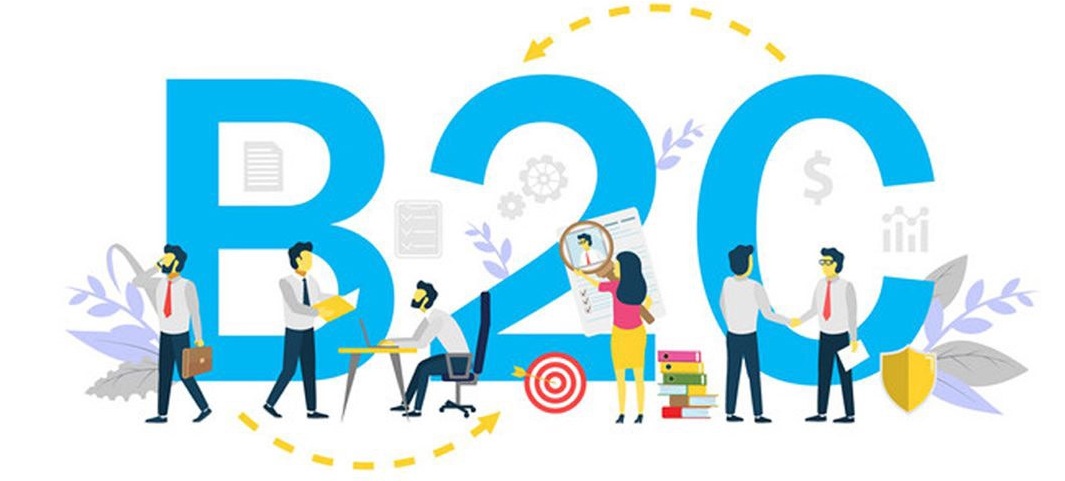
Now we will show what is most important for everyone who works in the online business, which is the “B2C”, and this means how to sell directly to people. In order for me to do this correctly, you, as a company, must do something called “buyer persona” or (marketing persona). It is done with the aim of knowing the person you are dealing with. In the case of online selling, the skilled seller extracts information from the person’s appearance when he begins to deal with him and begins to identify the data through which he can be persuaded to buy.
Here comes the importance of dividing the market and building the buyer’s personality, or the buyer’s personalities, in order to be able to know the characteristics of the buyer and thus be able to send a healthy message to him in their way that suits their personalities. After knowing the buyer’s personality correctly, you can make more than one advertisement in one advertising campaign and this is much better than In practice, instead of making one advertisement that targets everyone in the same way and method and does not give a result, it is better to make more than one advertisement in one advertising campaign. Each advertisement suits the personality of the buyer you are targeting. Later we will explain funnel marketing and the Aida model.

What is the buyer persona?
They are fictional representations of your ideal customers. These representations are based on real data regarding their demographics and online behavior. As well as speculation about their personal history, motives and interests.
How to get the data by which the market is segmented and build the personality of the buyer?
These data, which must be real, are obtained in order to be able to build a correct buyer persona. It is based on real data, as we explained previously through several methods, including:
-
Your large and confirmed previous experiences for the same market and for the same product, in the event that you have a place or shop through which you sell and you decide to go and sell online in the same market and place.
But note that online customers and their personalities may differ from the offline customers you know. -
Surveys and polls: Ask what people think of my product.
-
Personal interviews.
All these methods so far are just theoretical talk that does not bring real benefit. But if you want to get practical and useful data, it comes from:
-
Facebook groups and pages, for example, its goals and requirements.
This is a practical solution that gives clear and practical results.
Buyer Persona Elements (HubSpot Model)
-
Background, which is a person’s hobbies and studies, a general background about him.
-
Elements of a personal buyer’s work.
-
Demographics, which is about his age, marital status and place of residence.
-
Personality determinants are the way he speaks, his manner of speaking, and the words he uses.
-
The goals he wants to reach.
-
Challenges: What are the things that can prevent him from achieving his goal.
-
How to help.
-
Real sentences and phrases from the reality of the Facebook groups and the comments of the participants in the group.
-
Common objections are the obstacles that prevent people from buying your products. It is also known through the Facebook groups that you subscribe to.
-
The marketing message is what I do through my knowledge that I have collected through the previous points.
-
A short message: It is also a marketing message, but in a short, concise phrase.
These are the ten points of the Hubspot model, which can be dispensed with because it includes everything about market segmentation and building the buyer persona.
What are the 4 types of market segmentation?
There are four main types of market segmentation used in marketing and business strategy:
-
Demographic segmentation: This focuses on measurable population data such as age, gender, income, education level, marital status, and occupation.
-
Geographic segmentation: This divides the market based on location, such as country, city, region, climate, or urban vs rural areas.
-
Psychographic segmentation: This looks at lifestyle, values, interests, attitudes, personality traits, and social class.
-
Behavioral segmentation: This is based on customer behavior, including purchasing habits, usage rate, brand loyalty, decision-making patterns, and response to marketing messages.
What is the relationship between customer personas and market segmentation?
Market segmentation is the first step, while customer personas are the practical outcome of that step. Segmentation divides the market into groups based on shared characteristics, and buyer personas turn those segments into realistic, human profiles. In other words, segmentation answers who the market is, while customer personas explain why they behave in a certain way. Buyer personas are built using segmentation data to better understand customer needs, motivations, challenges, and goals, which helps create targeted marketing messages and personalized strategies.
How do you segment buyer personas?
What are the 4 types of buyer personas?
The four common types of buyer personas are:
-
Decision-maker persona: The person who has the final authority to approve the purchase.
-
Influencer persona: Someone who influences the buying decision but does not make the final decision.
-
User persona: The person who will actually use the product or service.
-
Buyer persona: The individual responsible for purchasing and handling payment.
Do you need a consultation about this topic?
Contact on WhatsApp
